AccessIndexAccessibility Data Platform
AccessIndex collects accessibility information from tourism venues through short, sector-specific questionnaires, scores each response, and feeds the results back into the destination websites they're listed on.
- Platform
- Laravel
- Location
- Ipswich, UK
- Client since
- 2022
The final product
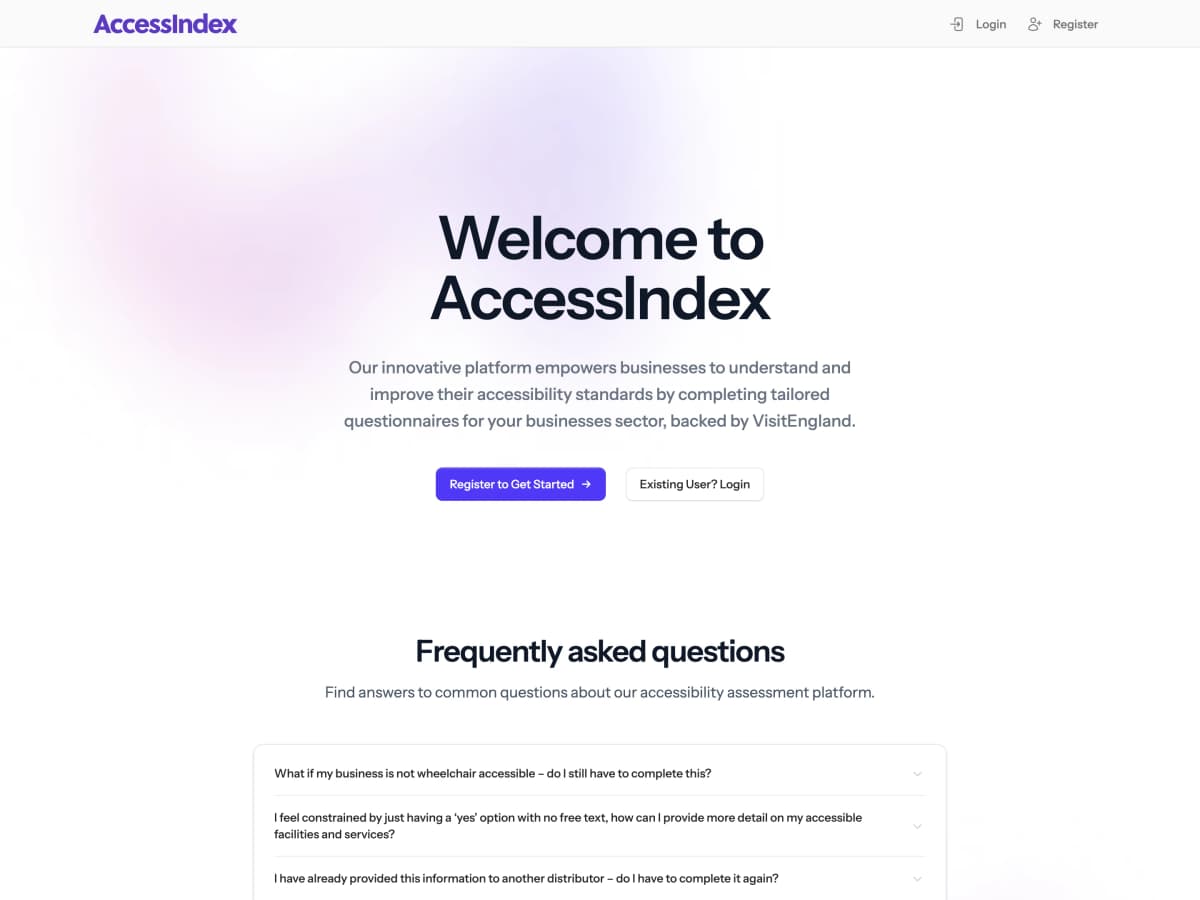
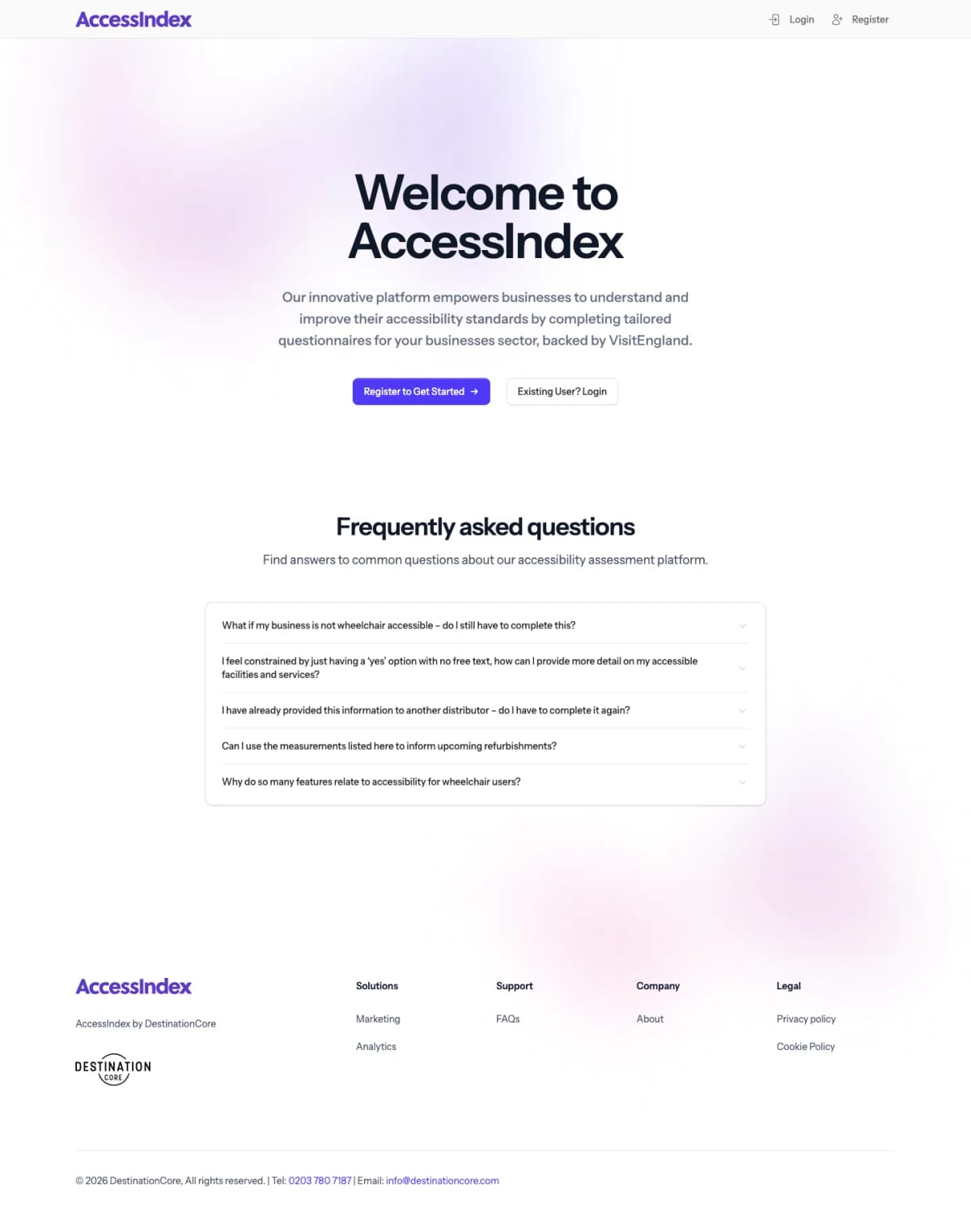
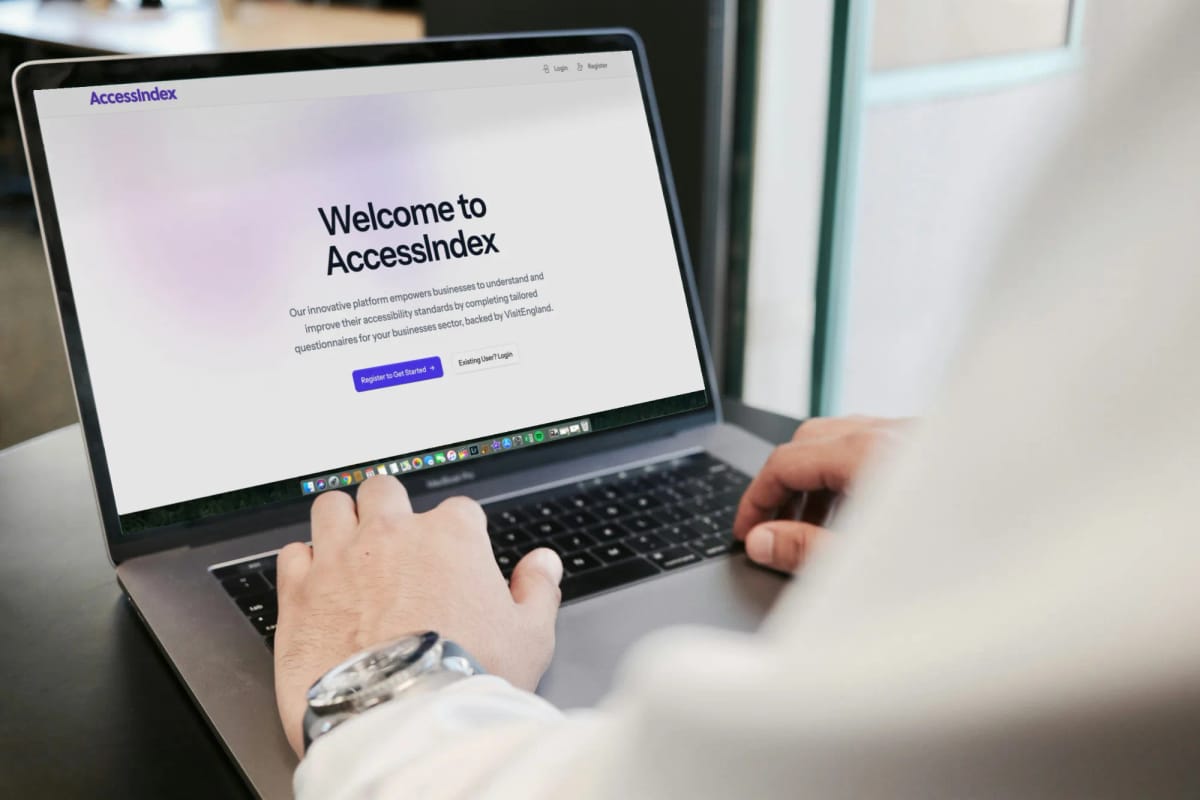
Screenshots showcasing the responsive design across devices.
The Brief
People with accessibility requirements hit the same problem when planning a trip: the information they need isn’t there. Whether a venue has step-free access, a hearing loop or a quiet space is rarely stated anywhere findable, and every business phrases it differently. VisitEngland’s answer was a defined set of Key Accessibility Features, described consistently across the industry.
DestinationCore build and run the websites for destination marketing organisations, each listing hundreds of local tourism businesses. They wanted this data gathered once, from the venues themselves, and shown on every listing — but the audience is largely non-technical operators who might use the platform for ten minutes a year. The questionnaire had to be short and tailored to the business answering it, access effortless, and the data fed back automatically across several destinations at once.
What we did
We built AccessIndex as a multi-tenant Laravel application with a Livewire and Tailwind interface. Each destination website is configured as its own tenant — API credentials, category-to-sector mapping and feature toggles — so new destinations are onboarded through the admin interface, not a code release.
The six sector questionnaires — 156 questions with guidance notes attached — were transcribed into structured question sets, so a venue only sees what’s relevant, and answers save as they work. Because a ticked box means little to a visitor, a translation layer turns each question into publish-ready, visitor-facing wording, and every response is scored against the features achievable for its sector.
Onboarding is automated: a nightly job pulls in each destination’s business directory, resolves each venue’s sector from the site’s own categories, and invites the relevant contacts by email. Sign-in is passwordless via magic links, invitations can be released in batches on large directories, and progress dashboards show who still hasn’t finished.
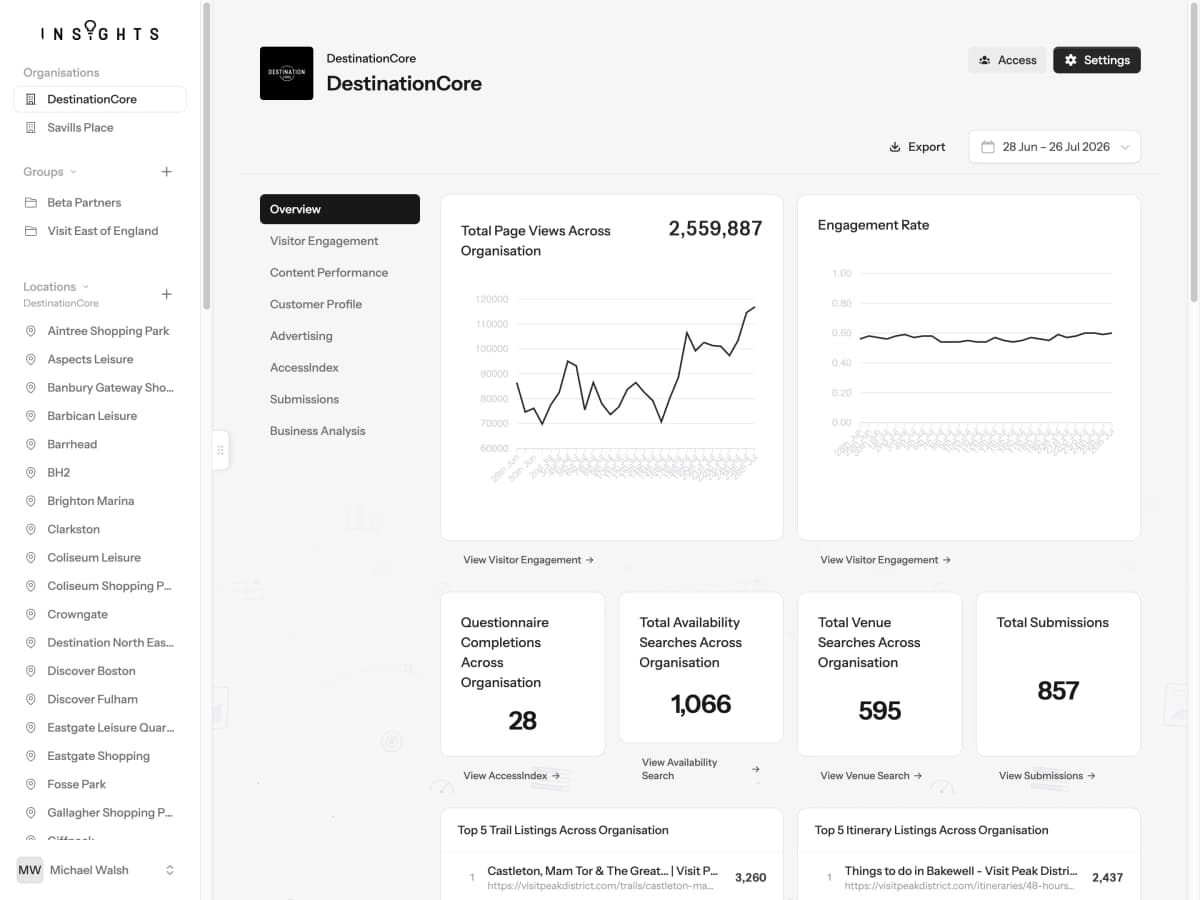
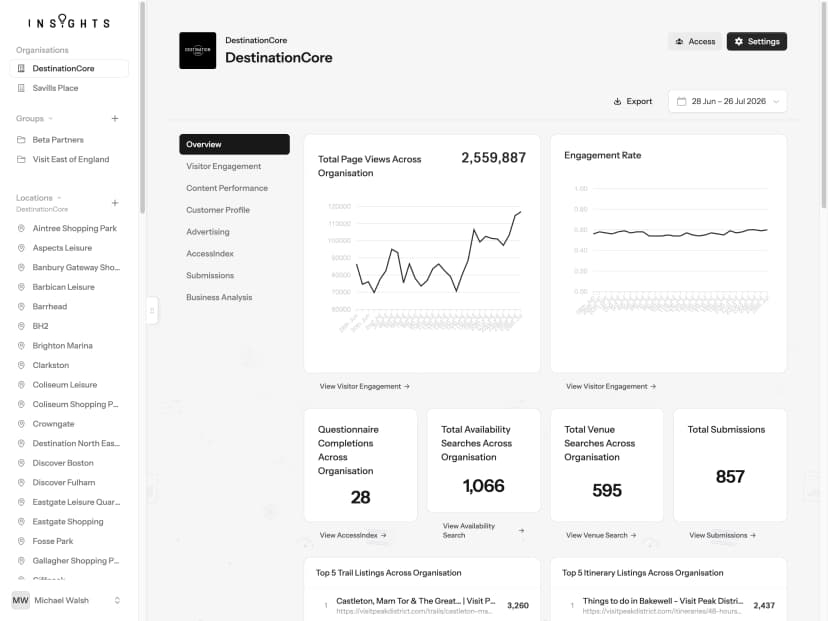
Completed responses post back into each destination’s Craft CMS through a companion plugin, populating the accessibility features on the venue’s own listing. Because the two systems are joined by people rather than tidy identifiers, we added fuzzy name matching, a repair screen for orphaned responses, and protection that stops a sync overwriting a venue’s sector once it has answered. An analytics dashboard and a read-only role for destination staff round it out.
Key features
The components and capabilities we delivered.
Sector-Specific Questionnaires
Six question sets covering 156 questions drawn from VisitEngland's Key Accessibility Features guidance, with answers saved as the operator works.
Accessibility Scoring
Each response is scored against the features achievable for its sector, so venues are benchmarked fairly against comparable businesses.
Two-Way Craft CMS Syndication
A nightly sync imports venue listings from each destination website; completed responses post back through a companion Craft plugin.
Passwordless Access at Scale
Venue contacts are invited by email and sign in with single-use magic links — no password barrier for occasional users.
Onboarding & Progress Tracking
Batched invitations, automated reminder nudges and per-destination dashboards showing which venues have completed, started or not begun.
Multi-Tenant Administration
Each destination is configured independently — API credentials, field mappings, category-to-sector mapping and feature toggles — alongside analytics dashboards.
When we started planning AccessIndex, Enovate was the natural choice. We'd worked with them before and knew them to be a trusted partner. From the outset they took the time to really understand our requirements, but they didn't just build to the brief. They challenged our thinking and came to us with proactive suggestions that genuinely added value to the finished product. That's exactly what we look for in a development partner.
Our approach
A proven process tailored to this project's unique requirements.
Discovery
We start by understanding your goals, audience, and constraints. Through workshops and research, we define the project scope and success criteria.
Strategy & wireframing
We map out the user journey and information architecture. Low-fidelity wireframes let us test ideas quickly before committing to design.
UX/UI design
Visual design that balances aesthetics with usability. We create interfaces that look great and guide users effortlessly toward their goals.
Development
Clean, well-documented code built on proven frameworks. We develop iteratively, sharing progress regularly so you're never in the dark.
Quality assurance & launch
Applications and integration-heavy builds ship with automated test suites, and every project is checked across devices and browsers before it goes live. We handle deployment and keep the launch itself uneventful.
Ongoing support
Our relationship doesn't end at launch. We provide proactive maintenance, security updates, and responsive support to keep your product thriving.
related projects


Planning a similar project?
Let's discuss how we can help you achieve your digital goals. We typically respond within one business day.